What’s Happening
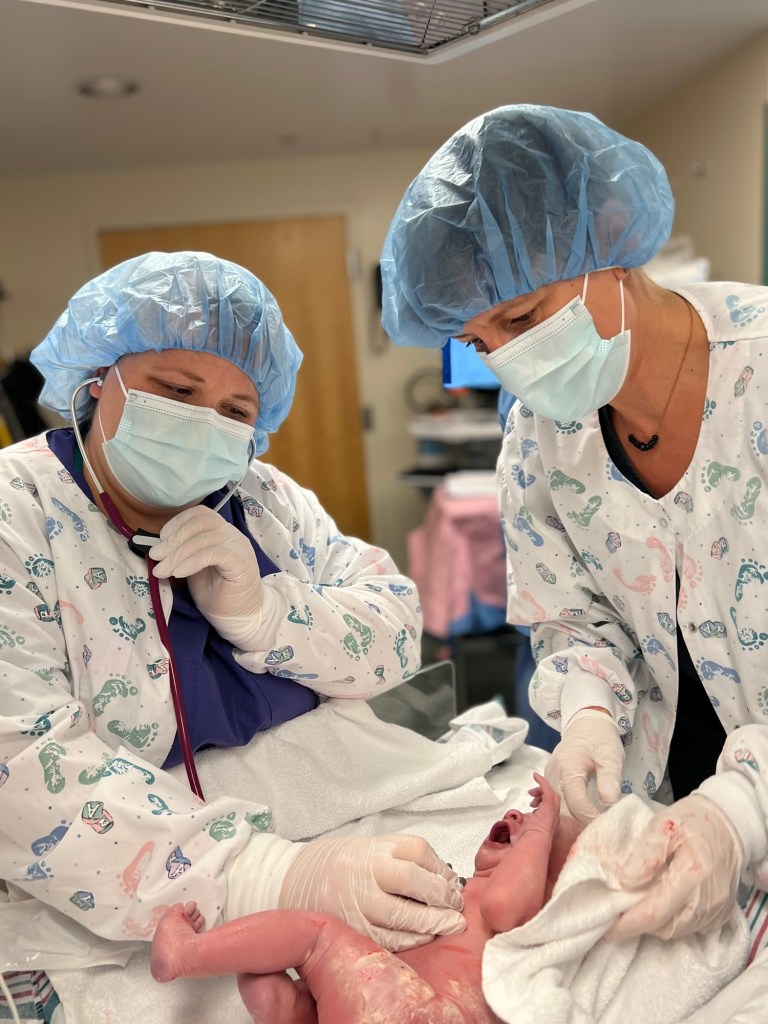
Like most hospitals across our state and country Brattleboro Memorial Hospital is facing significant financial challenges under the current model of health care. Many rural hospitals have closed their birthing units in response to these financial pressures. More than 130 rural labor and delivery units have closed or announced closure since 2020 — more than two per month! Unfortunately, BMH is not immune to these pressures and keeping the Birthing Center at BMH open is no longer financially sustainable without support from the state and individual donors. WE NEED YOUR HELP!
Why Keeping Birth Local Matters
What closure of the BMH Birthing Center would mean:
- At least 50 jobs would be lost at BMH across multiple service lines due to this reduction in patient care.
- More than 550 Vermont patients per year from just two counties, Windham and Windsor, would deliver out of state — representing over 10% of all Vermont births. The majority of healthcare costs go to salaries — losing those salaries would hurt local economies and decrease Vermont’s tax base. Vermont tax dollars should not be subsidizing New Hampshire’s economy and hospitals.
- Windham County is already the oldest county in the oldest state. We need to shift these demographics by recruiting and retaining young families — a task that would be nearly impossible without a birth center.
- GYN care would also be severely limited without BMH’s midwives. BMH midwives conducted nearly 2,000 GYN visits last year. Primary care providers cannot absorb that need.
- Nearly 1 in 3 Vermont pregnant people already travel farther than 30 minutes to reach a birth hospital — three times the national average. Prenatal and birth care would be further limited due to travel distance. Increased travel time is a well-documented risk factor for maternal and infant complications.
Read the Op-Ed
Our Birth Center Is Worth Saving.
Are We Willing to Save It?
By Corina Tennant, MD, Chief of Obstetrics and Gynecology, Brattleboro Memorial Hospital
When I became an OB/GYN, I was told, “Great choice — you’ll never go out of business delivering babies.” I now find myself fighting to make sure that’s still true.
To remain financially solvent, BMH has to consider closing our birth center. But we are not delivering babies to make a profit. We are delivering babies because it is essential. The question is not whether we can afford to keep the birthing center open — it is whether we can afford to close it.
I knew I wanted to be an OB/GYN when I was two years old, watching my parents
prepare for my sister’s homebirth in Dummerston. But after almost two decades at large academic medical centers, I found myself a cog in a system rich in specialists — all underutilized and replaceable. In 2020, after giving birth to my own two kids, something snapped into focus: I needed a community where my work and my family could exist together.
At BMH I found it. I help patients conceive, deliver their babies, and treat the prolapse and incontinence that can come with time. Earlier this year, we delivered a baby at 23 weeks, the mother too unstable to transfer. In the middle of the night, a homebirth patient arrived in hemorrhagic shock after a 45-minute ambulance ride. She would have likely died if she had had to travel another half hour. We are saving the lives of our neighbors.
Five years after returning to Brattleboro, I find myself in a fight I didn’t sign up for —but one I could never walk away from. Since 2020, more than 130 rural hospitals have closed or announced plans to close their labor and delivery units — more than two per month. We are fighting to avoid becoming part of that statistic. Here is the reality:
Birth centers lose money. They always have. The difference now is there’s
nothing left to cover the loss. BMH collects only 43 cents of every dollar billed for
OB/GYN care. Hospitals historically offset these losses with revenue from specialty care, surgery, and radiology. That model is collapsing. Nationally, Medicare covers 83% and Medicaid covers 58% of the true cost of healthcare, forcing hospitals to rely on private insurance to make up the difference. In Windham County — the oldest county in Vermont, with high rates of poverty — there are not enough private insurance dollars to cover the gap.
The fixed costs of running a birth center don’t bend with volume.
Round-the-clock staffing must be maintained every hour of every day, whether one baby or twenty are born that week. A hospital delivering 150 babies a year pays nearly the same operating costs as one delivering 500, but receives only one-third of the revenue. Vermont has the lowest fertility rate in the nation, and Windham County has the lowest in Vermont. Births here have declined 20% since 2019, compared to 10% statewide and 3% nationally. Brattleboro’s population has been stable since the 1980s, yet births at BMH have dropped from nearly 500 per year to fewer than 250 today.
The workforce pipeline is thin. Recruiting OB/GYNs, labor and delivery nurses,
and anesthesiologists to rural communities is genuinely hard. Medical training happens in large urban centers, and graduates tend to stay where they train. When a key provider leaves, there is often no one ready to step in — and filling the gap with traveling clinicians costs far more. At any given time, multiple hospitals in Vermont are recruiting OB/GYNs.
The BMH Birth Center Is Worth Saving
When I was born at home in Newfane, my parents relied on Brattleboro Memorial
Hospital as their backup. Forty years later, I am the one providing that backup. BMH is not simply a safety net — we have built one of the highest-quality community obstetric programs in New England.
In 2025, our primary cesarean rate was 13% and overall cesarean rate was 24% — well below national averages of 23% and 33%. Our midwife-led birth model trusts the natural birth process, with the clinical judgment to know when intervention is
necessary. We have never gone on diversion. Our nursery runs 24/7 with clinicians
certified in neonatal resuscitation, backed by real-time collaboration from Dartmouth’s Maternal Fetal Medicine and Neonatology teams.
Windham County has Vermont’s highest homebirth rate — 6%, more than double the state average — and BMH accepts more homebirth transfers than any other community hospital in the state. Three times more Vermonters live more than 30 minutes from a birth hospital compared to the national average. When something goes wrong outside a hospital, we are the safety net that saves lives.
Vermont is the only state in the nation to earn a perfect “A” grade on the March of
Dimes maternal health report card. That is not an accident. Annual skills training,
statewide data review, and a deeply collaborative care network have made Vermont’s community hospitals among the safest places in the country to have a baby. Keeping births in Vermont is the safest option for our residents.
The Financial Reality
BMH pays approximately $3.8 million per year for birth services uncovered by
insurance reimbursement — and is now drawing directly from our dwindling
endowment to cover the gap.
Closing the birth center would eliminate that loss — but closing our birth center would cost our community far more than it would save. Windsor County lost its delivery hospital in 2019 — and today, 80% of Windsor County residents give birth out of state. If BMH closes its birth center, that number grows to nearly 600 births leaving the state – over 10% of Vermont births. Those are not just births — they are Vermont healthcare dollars and higher-wage jobs given away to neighboring states. BMH is the largest employer in Brattleboro. Closing the birth center would mean roughly 50 lost jobs.
When communities lose birthing services, young families leave or don’t come — a
pattern already well underway in Vermont.
No community hospital can solve this crisis alone. It requires state and federal
reimbursement reform, rural health investment, and local philanthropy. We are fighting on all of those fronts — and we need our community alongside us.
There Is a Way Forward
We will lose our birth center if we do not act swiftly and decisively.
We must recapture out of state births with insurance incentives, medical transportation from Windsor County, and hybrid prenatal care models with Children and Infant Services.
Vermont Medicaid and private insurers must increase reimbursements for childbirth services. Vermont should also implement Standby Capacity Payments — proposed by the nonpartisan Center for Healthcare Quality and Payment Reform — combining fixed monthly payment per woman of childbearing age in the service area with a Service-Based Fee when a birth occurs.
How You Can Help
Use our services. Choose BMH for prenatal care, delivery, and all your healthcare
needs. Every service here helps offset the cost of keeping the birth center open.
Give. Charitable gifts to the BMH Foundation help replenish the endowment keeping the birth center alive. In the short term we need philanthropy; long term, systemic policy change is essential.
Speak up. Contact your legislators and the Green Mountain Care Board
(GMCB.Board@vermont.gov). Push for increased Medicaid payments for birth services. Urge the GMCB to balance cost-control policies with the survival of rural hospitals. Express the community’s need for birth services to BMH’s Board and executive leadership — and thank them for fighting to keep these services here.
Maternity care is more than a hospital service — it is foundational to a thriving
community. We have to decide, as a community, how we will show up for our birth
center — before apathy or indecision decides for us.
The next generation of Windham County families deserves to be born here, close to home and surrounded by the community that will help raise them.
—
Corina Tennant, MD, is a board-certified OB/GYN, Chief of Obstetrics and Gynecology at Brattleboro
Memorial Hospital, and a partner at Four Seasons OB/GYN & Midwifery.
 Save Birth at Brattleboro Memorial Hospital